
Many students who go to Korea to study face the same question: how do I prove that my diploma is genuine abroad? The answer is that documents issued in Uzbekistan are usually certified with an apostille for use in another country, and then translated. This article explains what an apostille is, which documents need one, who issues it and how to prepare a notarised translation for a Korean application.
What an apostille is and why you need it
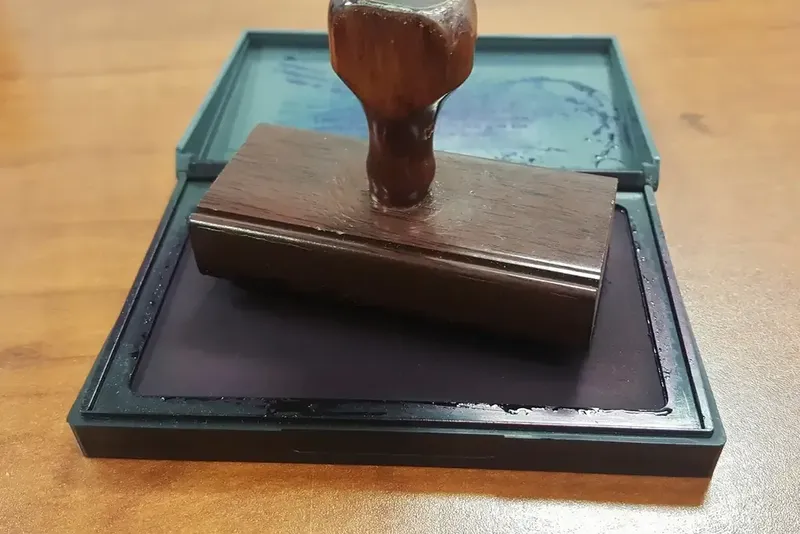
An apostille is an international certificate of authenticity for a public document. It is issued under the Hague Apostille Convention, and a document carrying an apostille is accepted in another state party without the extra step of consular legalisation. Uzbekistan's accession to the Convention entered into force on 15 April 2012. Korea has been a party since 14 July 2007.
Korea did not object to Uzbekistan's accession. According to the Hague Conference, the list of objections does not include Korea, so an apostille issued in Uzbekistan is accepted in Korea. The usual route through a consulate is therefore not needed for this purpose.
An important point is that an apostille does not confirm the content of a document. It only confirms that the signature and seal of the official who signed it are genuine. The document itself must therefore be real and correctly prepared.
Which documents need an apostille
For a Korean application the apostille is most often required on the following documents:
- your school-leaving certificate (for bachelor's applicants) or your diploma with its transcript;
- a birth certificate, if it is requested;
- a certificate of no criminal record;
- in some cases a medical certificate or another official paper.
Private documents, such as a bank letter, a personal recommendation or a plain copy, usually need to be notarised first. Each university sets its own requirements, so write down the list before you apply.
Who issues the apostille
In Uzbekistan the apostille is issued by different bodies depending on the type of document. As of 2026, Cabinet of Ministers Resolution No. 732 of 3 December 2021 (as amended) assigns them as follows:
- higher, specialised secondary and vocational education documents (diploma, supplement, transcript): the Agency for Assessment of Knowledge and Skills (formerly the State Testing Center);
- school documents (school-leaving certificate): the Ministry of Preschool and School Education;
- documents from justice bodies and the civil registry, such as a birth certificate: the Ministry of Justice of Karakalpakstan and the regional and Tashkent city justice departments;
- court documents: the Supreme Court;
- documents from prosecutors and investigative bodies: the General Prosecutor's Office;
- all other official documents: the Ministry of Foreign Affairs.
You apply through a public service centre or the my.gov.uz portal. Under the resolution, a request is normally processed in two working days, or up to ten working days if a signature sample has to be checked. The fee is 20% of the base calculation amount for education, justice and civil registry documents and 10% for other documents. The procedure and amounts can change, so check them on my.gov.uz before you apply.
Notarised translation
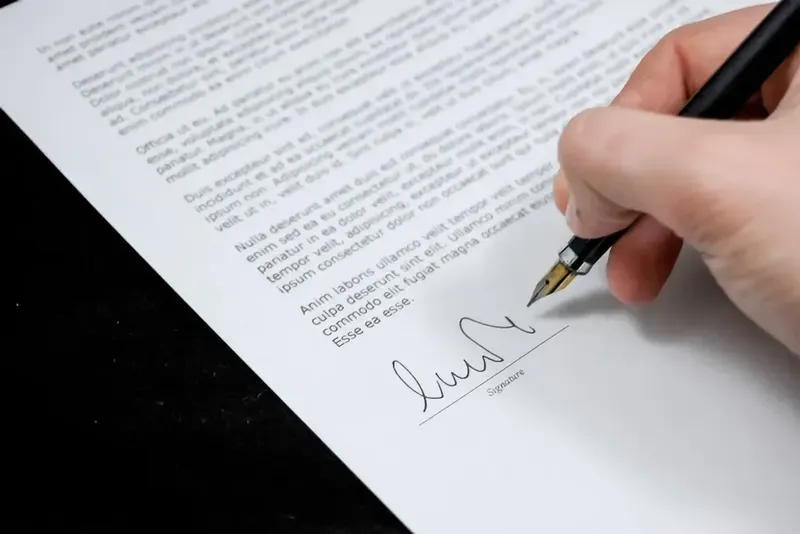
The apostille is usually placed on the original document in Uzbek or Russian, while the translation is prepared separately. Korean universities most often ask for an English or Korean translation. A qualified translator produces it, and in many cases a notary certifies the translator's signature.
During translation, names, dates, the name of the institution and the grades must be copied accurately. A single wrong letter can cause a question at the admissions office. Read the whole translation carefully and check that your name is written exactly as it appears in your passport.
Most importantly, ask the university whether the translation itself needs an apostille, or whether a notarised certification is enough. Requirements differ, so settle this at the very beginning.
Step-by-step order
- Identify the university and its list of required documents.
- Prepare the original diploma and transcript, together with the copies you need.
- Apply for the apostille to the relevant authority through my.gov.uz or a public service centre.
- Give the apostilled documents to a qualified translator and ask for a notarised translation.
- Check the translation and the documents together and keep one set for yourself.
- Send or submit the documents to the university and ask for confirmation of receipt.
The whole process can take several weeks, so start early, well before the application deadline.
What Korean universities check
Each university follows its own procedure. Some accept scanned copies at the first stage, but ask for the originals later by post. Before you apply, find out which version is needed straight away and which will be needed on admission. If an original has to be sent, use a courier or a registered postal service with tracking, and double-check the address.
Another detail matters too: make sure your contact details are correct. Your email address and phone number should match what you wrote on the application form. If you have not heard back for a long time, send a written enquiry rather than waiting.
What to do if you find a mistake
If you find an error in the apostille or the translation, do not use the document any further. First decide what is wrong: the spelling of a name, a date, a grade or the name of an institution. If the mistake is in the translation, go back to the translator, ask for a correction and have the text certified by a notary again. If the mistake is in the original document, you need to contact the organisation that issued it. Keep every letter, receipt and confirmation, because they may be needed in correspondence with the university.
Common mistakes
- Assuming that the apostille goes on a copy. Usually the original, or the correct form of official copy, is needed.
- Names that do not match the passport exactly.
- Sending a translation without an apostille or a notary, when the university asks for one.
- Leaving the apostille until the last few days.
- Losing the original diploma before it has been certified.
If you already know which university you are applying to, check its requirements right away, so that you do not spend time on unnecessary steps. If you need help with the process and the translations, K-Study can review your case with you in a free consultation.