Many families use an agency at some stage of going to study in Korea: collecting documents, applying to a university, preparing for the visa. Such help can be useful, but some firms rely on families' trust. Treat the choice of an agency as seriously as the choice of university.
Check the licence first
Every agency should hold permission to operate. Our company works under licence number 312109909, but a number alone should not be your only reason to trust anyone. Ask any agency to give you its licence number and the authority that issued it, in writing. Then check the details yourself on the official government website and keep a record of the result.
A licence is only the first filter. If a firm avoids showing its licence, sends only a picture that cannot be verified, or cannot be checked at all, treat that as a serious warning.
What the contract must say
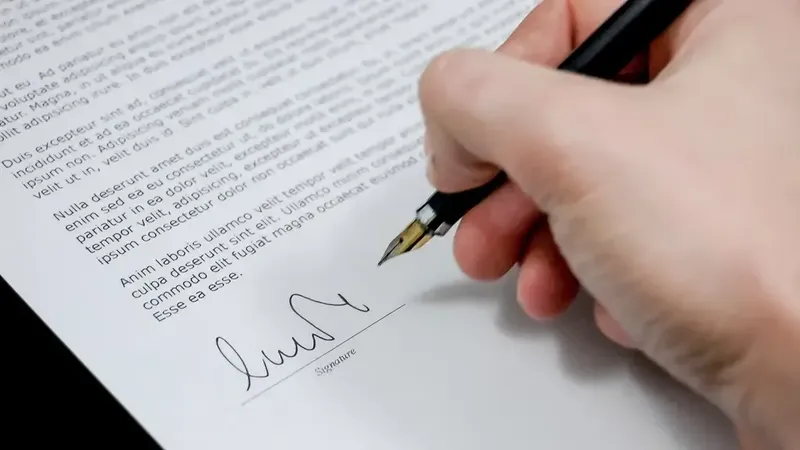
The contract can be on paper or electronic, but every clause should be clear. Pay attention to the following:
- The list of services: what is done, what is included and what is not.
- The payment schedule: when and how much, and to which account.
- Refund terms: what happens if the visa is refused, the university does not admit you, or you change your plans.
- Deadlines: how long the preparation of documents and the wait for results take.
- Responsibility: who answers for each document.
- Data protection: who receives copies of your passport and bank details, and how they are stored.
If the contract is long and hard to understand, read it with your parents or a lawyer. Never sign under pressure.

Signs of fraud
- Guarantees such as "100% admission", "visa guaranteed" or "everything ready in a week". No firm can guarantee a decision by a university or an embassy.
- A demand for cash or for payment to a personal card without a contract.
- A large advance payment with no documents shown to you.
- Talk of an "official partnership" with a university, without a document that proves it.
- Claims that the agency acts on behalf of the embassy or a government body. Such claims should be checked through the embassy's official channels, and nothing should be paid without a contract and a receipt.
- A promise to get a visa without the required documents, for example without a bank statement, together with a request to send tuition to a personal account. The Korean embassy in Tashkent described exactly this scheme in its warning of 22 April 2025.
- Becoming unreachable after payment, or being reachable only through a personal number.
What to know about the visa
The decision on a student visa is made by the consular section of the Korean embassy in Tashkent. The embassy publishes on its website a list of accredited travel firms, as well as the documents and review criteria for student visas (the latest notice came out on 12 June 2026). Check yourself on the embassy's official page where and how documents are accepted, and compare it with what the agency tells you.
An important rule: an agency can help collect documents, but responsibility for the application stays with you. Under the embassy's criteria, the applicant must fill in the Study Plan in the visa application personally, otherwise the visa may be refused. So be wary of offers to "write everything for you", and read every document before you sign.

Questions to ask at the first meeting
Ask these questions and write down the answers:
- What is your licence number and who issued it?
- Which universities do you work with, and how can I check that?
- What does the fee include, and are there extra charges?
- When and how is money refunded?
- Who will personally answer my questions?
- How do I get the admission letter, and where can I verify it?
- How is my data stored, and who receives it?
Vague answers or ignored questions are an answer too.
Advice for parents
If the whole family makes the decision, come to the agency meeting together with your parents. Parents usually want to keep control of money and documents, and that is right. Show them the contract and the account details before every payment. If the agency tries to bypass the parents or pushes for a quick decision, treat that as a warning.
The student should be active too. Find out yourself the university name, the length of the programme, the language requirements and the cost of living. Compare what the agency tells you with your own checks. Then the choice is yours, not the agency's.
If the decision is hard, take your time. Visa and study deadlines exist, but rushing almost always costs more.
Choosing a trusted study abroad agency: the decision
Do not rush. Talk to at least a few firms, compare their contracts and decide together with your family. A low price is not always a good deal, because hidden costs may appear later. For general background, read our articles on the first month in Korea and preparing for TOPIK.
What to keep alongside the contract
You should keep the signed contract, all payment receipts, the list of services and the written correspondence. Ask for a receipt for each payment and check that it shows the contract number and the date. Confirm verbal agreements in writing, for example by message: "the documents will be ready this week". Such messages are the strongest evidence if a dispute arises later.
Where original documents should stay
Do not hand your passport, diploma or other originals to an agency unless the procedure really requires it. Giving copies is normal practice. If an original is needed, the contract should state how and when it will be returned. Hand over passport copies only when you know what they are for, and ask where and how they will be used.
How to check an admission letter
Do not rely on the agency's word that you have been admitted. Get the letter from the university's official email address or from its student portal. The reference number and the organisation's name should match what appears on the university website. If in doubt, write to the university's international office yourself. This check should never depend on the agency, and it is especially useful when a company describes itself as an official partner.
If a problem appears
First describe the problem in writing: what happened, when, and what evidence exists. Keep messages, receipts, the contract and screenshots. If a conversation was verbal, write down what was said straight after it. If you cannot reach an agreement, seek advice from a lawyer or from an organisation that protects consumers. Do not make new payments while the dispute is open.
Checklist before you choose
- Did you get the licence number in writing and check it in an official source?
- Does the contract describe how money is refunded?
- Is payment made only to an official account and against a receipt? Does tuition go to the university's official account?
- Is it written down how original documents are kept?
- Is it clear how contact with the university happens?
- Have you compared at least a few companies?
- Has someone you trust read the contract?
If you cannot answer yes to a question, postpone the decision. A good agency does not rush you and gives you time to think.
The first consultation with K-Study is free. We will show our licence, a sample contract and the payment process in advance, so that your decision is informed. To book, leave a request with the button below.