
Many parents who send a child to study in Korea ask the same question first: how much does housing cost, and where is it safe to live? There is no single answer, because there is a big difference between a university dormitory, a small room and renting a flat. In this article we compare the options, show what makes up the monthly costs and explain what to check before signing a contract.
University dormitories
Most universities run their own dormitories. They are located on or close to the campus, so the trip to class is short. Dormitories often have a library, a computer room, a gym and a canteen. For a student this is real support, especially in the first semester.
Rooms are usually single or shared, for example for two or four people. A single room costs more but gives more privacy. In a shared room you need to agree on routines with your roommates. Admission conditions and fees differ between universities, so ask the dormitory office for the exact details.
Dormitories have strict rules on visiting hours, noise, guests and room tidiness. Read them before you arrive, because breaking them can affect your place there.
What it costs each month
The official Study in Korea guidebook, published by NIIED in December 2023, gives approximate monthly costs: about 750,000 to 1,000,000 won in total. Prices may have risen since then, and costs vary with the city and your lifestyle. Housing is estimated at 500,000 to 700,000 won per month, and the final figure depends on the capacity of the dormitory and on whether meals are included. Meals are estimated at 200,000 to 300,000 won, transport at 50,000 to 100,000 won, and communication, insurance and other small costs at 100,000 to 200,000 won. A single meal in a university cafeteria may cost roughly 5,000 to 15,000 won.
These are estimates, not contract prices. They help you understand the structure of the budget, but a precise plan needs the figures of the specific university and the specific home.
Goshiwon, small rooms and other options
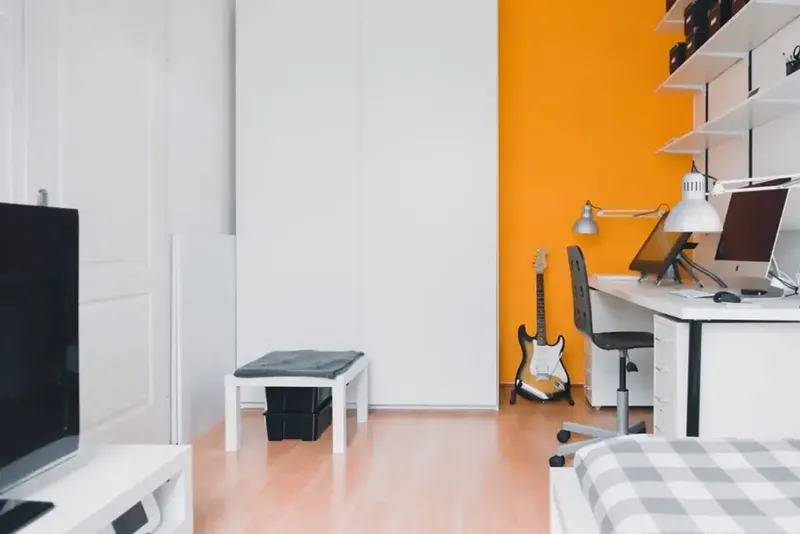
If there is no space in the dormitory, students usually look at other options. A goshiwon is a compact single room, often with shared bathrooms and a kitchen. It works for simple living, but the room can be very small. A one-room is a separate small flat with its own bathroom and a small kitchen area, and people who want to live alone often choose it.
Another option is a share house, where you rent with other students. It can be cheaper, but your relationship with the landlord and housemates matters a great deal. Every option has different terms, so choose the one that suits you. Before moving into a small room, see it in person and ask about water, heating, internet and lighting.
Renting usually involves a monthly payment and a deposit, which is a security payment. Deposits are returned under different conditions, so they should be written clearly into the contract.
Contracts and deposits
A rental contract may be written only in Korean. Read it with someone you trust, or have it professionally translated. The questions people ask most often are: when and how is the deposit returned, how much notice must you give, who pays the utility bills, and what happens if you leave before the end of the term.
Before you sign, photograph the room, note any damage and keep the payment receipts. This simple step prevents many disputes at the end of the tenancy.
Registering your address
When you move, you must report the change of address. According to the Study in Korea portal, a registered foreign resident must report an address change within 15 days of moving. Failing to do so can result in a fine of up to 1 million won.
If you plan to stay in Korea for more than 90 days, you must also register as a foreign resident within 90 days of entry. These rules depend on your visa and status, so check them on our visa status page.
What matters when choosing a place
Beyond the price, check a few things. First, the journey to class: a long commute every day tires you out and wastes time. Then safety: lighting in the evening, the condition of the entrance and how quiet the area is. Heating and hot water, noise levels and internet speed matter too. If shops, a market, a hospital and a bank are nearby, daily life becomes much easier. Finally, see how easy it is to talk to the landlord or the dormitory manager. If they answer your questions clearly and quickly, that is a good sign.
A practical plan for the first week
Plan the first week in advance. If you live in a dormitory, collect your keys and learn the house rules first. If you have rented a flat, check the contract once more using the questions in this article. Then sort out your phone and internet. Do not forget the deadline for reporting a new address, which is 15 days after you move. If you cook for yourself, start with a small shopping trip, because many things will not be needed in the first month. And make sure to visit the university's international office: they can explain the questions about study, housing, transport and work, and you will save a lot of time.
Common mistakes
- Looking only at tuition and forgetting food and transport.
- Signing a contract you do not understand and relying on verbal promises.
- Paying a deposit without checking the conditions for getting it back.
- Choosing a home from photos alone, without seeing the room.
- Forgetting to report an address change within 15 days.
Choosing a place to live is not a one-day decision. First calculate the costs for the first month, and then choose a long-term option. If you are not sure which option suits you, K-Study can go through your budget and requirements with you in a free consultation.