For most international students, a bachelor's degree is the main route to study in Korea, and it usually takes four years. Admission conditions, language requirements and the choice of major are not always simple, though. This article explains how the programme is organised, what admission asks for, what role TOPIK plays and how to choose a major. The information reflects official sources for 2026: studyinkorea.go.kr and university guidebooks. Each university can have its own rules, so check the exact requirements on its official website.
How a bachelor degree in Korea is organised
A bachelor's degree in Korea usually takes four years; the official guidebook gives 4–6 years, so some majors take longer. Study follows a credit system: in each semester the student earns a set number of credits. Early years usually include more general subjects, and later years focus on the main major.
International students study on a D-2 visa. A language course is taken on a D-4 visa, so it is important to know which type of programme you are choosing. If your route starts with a language course, it may become a separate stage before you enter the main bachelor's programme.
Admission requirements
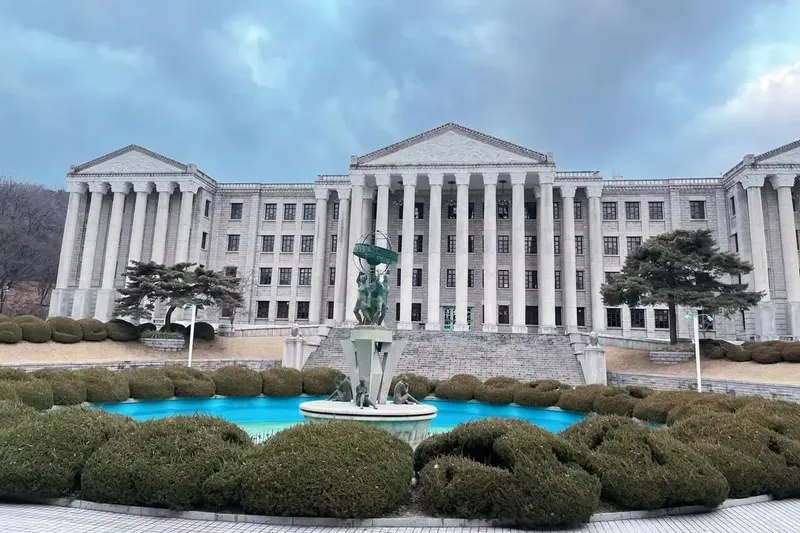
According to the official guidebook, a bachelor's applicant must have completed the full primary and secondary curriculum (12 years). For countries with a shorter school system there is a separate rule: an applicant who completed the entire school programme of their country can be admitted if the head of the university confirms it from documents. School in Uzbekistan lasts eleven years, so ask the university in writing, in advance, how your certificate will be treated. More on this: study in Korea after high school. You will also need a school diploma, an academic transcript with grades, a passport and certified translations.
Admission usually has several stages: document review, a motivation letter or personal statement, and sometimes an interview. Universities assess academic results, the language certificate and motivation together. For example, one national university's guide for the 2027 academic year scores the personal statement out of 30, the study plan out of 30 and the interview out of 40, with an average of at least 70 out of 100 needed to pass. So prepare each document calmly and in advance. In your motivation letter, state clearly why you chose this university: the major, a lab, a professor or the city. Generic sentences rarely impress an admissions committee.
Language level: Korean or English
Programmes taught in Korean usually ask for a TOPIK result. The official guidebook gives the general rule: TOPIK level 3 to enter and level 4 to graduate. For example, one national university's guide for the 2027 academic year asks for TOPIK level 3 or another accepted proof for entry and requires TOPIK level 4 before graduation. Put TOPIK into your plan from the start. If your current level is below the requirement, begin with a language course and plan the progress in stages rather than at the last minute.
For English-taught programmes, the official guidebook says TOPIK is not mandatory: a recognised English test such as TOEFL is accepted instead. Requirements differ between programmes, so check the table on the page of the specific course. Even if you study in English, knowing Korean will help you in daily life and when you look for work.
How to choose a major
Choosing a major is one of the most important decisions. Universities offer humanities, social sciences, natural sciences, engineering, the arts and physical education. The same major name can mean different programmes at different universities, so read the course descriptions and not only the title.
Answer three questions. Which subjects genuinely interest you? What profession or further study does the major open up? Do your language level and grades match what the university asks for? If the answers to all three point the same way, the choice becomes much clearer. Open days and online information sessions are also useful, because you can ask a department directly about its programme.
Costs and scholarships
The cost of a bachelor's programme depends on the university, the city and the major. The Study in Korea scholarship page states that most universities offer scholarships covering 30 to 100 percent of tuition, depending on academic results. That is the range of what exists, not an amount every student receives. For example, one national university gives new students with TOPIK level 3 or higher a 22 percent discount on first-semester tuition for the 2027 academic year. For more detail, read the article on university scholarships and discounts.
Include accommodation, food and transport in your budget, not only tuition. These costs can vary a lot between cities.
D-2 visa and working while studying
Most bachelor's students apply for a D-2 visa. The official guidebook explains that students enrolling in regular academic programmes receive D-2, while language course students receive D-4. The application is made with the admission letter from the university, so make sure you get it on time. For the financial documents, read how to prepare proof of funds.
Degree students may work part-time while studying, but immigration rules limit this. The weekly hour limits depend on the year of study and the level of Korean. The official guidebook contains a table, and it is worth reading before you look for a job.
First steps
- Translate your school certificate and ask the university about apostille.
- Shortlist the majors that suit you and read the programme descriptions.
- Find out your TOPIK level and compare it with the university requirement.
- Write the admission dates of each university in your calendar.
- Set aside time for the motivation letter and personal statement.
- Ask in writing about the conditions for discounts and scholarships.
Common mistakes
- Choosing a major only because friends recommended it.
- Applying without checking the twelve-year schooling requirement.
- Going into admission without a TOPIK plan, which is needed both to enter and to graduate.
- Counting only tuition and not the cost of housing and food.
A bachelor's degree in Korea is a multi-year project, and the right route depends on your certificate, your language level and your goal. In a free consultation, K-Study can help you check the university requirements against your plan.